Pros Cons Gas Rewards Credit Cards: Evaluating the Benefits and Drawbacks in 2025
November 19, 2026 · Alexander Whaley
With gas prices always changing, I often wonder if gas rewards credit cards are really worth it. These cards promise savings at the pump but also have their own pros and cons.
A gas rewards credit card can save you money on fuel, with some cards offering up to 5% cash back. This could save you nearly $3 on a typical 15-gallon fill-up.

When I fill up my tank, I see how these costs grow over time. Gas credit cards can help offset these expenses by offering rewards for fuel purchases.
Not all gas cards are the same. Some give rewards in many categories, while others charge higher interest rates or annual fees that could reduce your savings.
Before you apply for a gas rewards card, think about your driving habits and credit goals. Frequent drivers may benefit from strong gas rewards, but casual drivers might prefer a general rewards card.
Key Takeaways
- Gas credit cards can provide up to 5% cash back on fuel purchases, but benefits vary between cards.
- Check interest rates, annual fees, and reward rules before choosing a card, as these can affect your savings.
- The best gas card depends on your driving, spending habits, and whether you want cash back or travel rewards.
How Gas Rewards Credit Cards Work
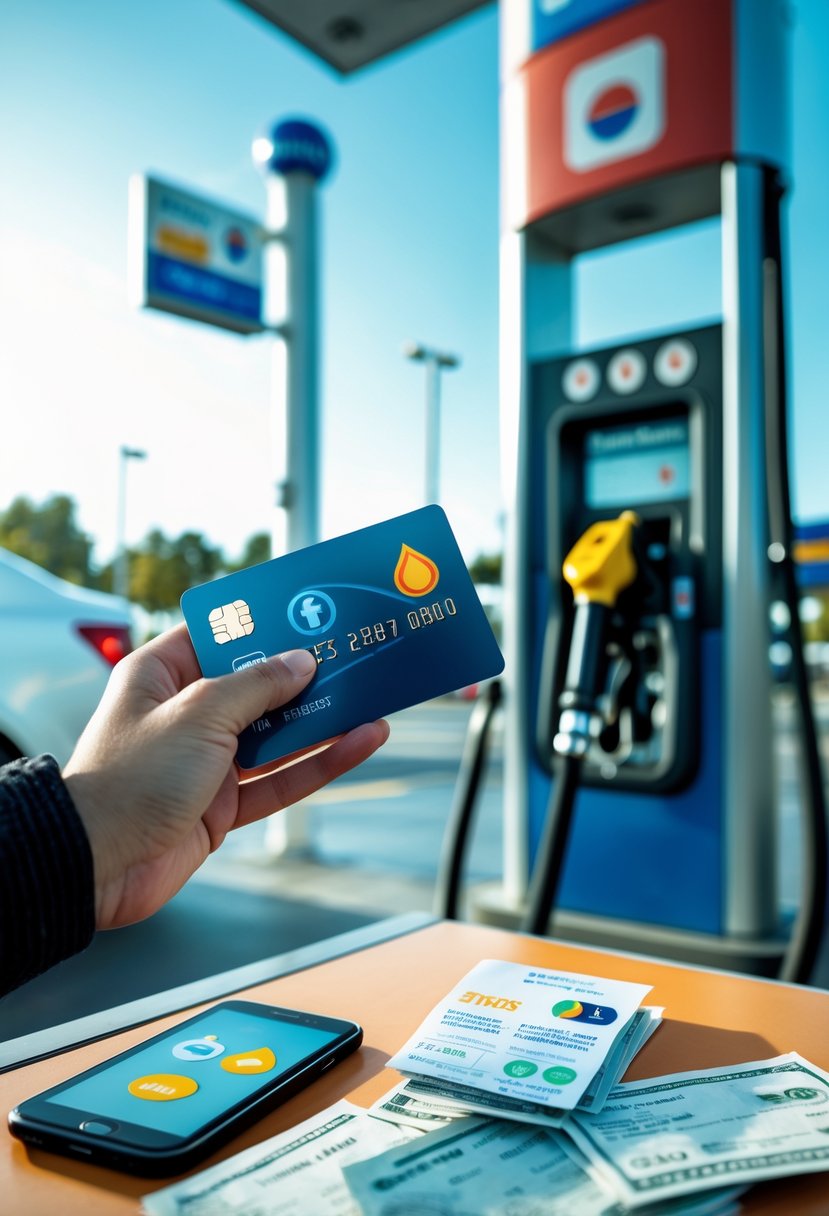
Gas rewards credit cards help you save on fuel through special rebate programs. These cards offer specific benefits for gas station spending.
Earning Gas Rewards
Gas rewards credit cards usually give cash back or points for purchases at gas stations. Most cards offer 3-5% back on gas and 1-2% on other spending.
Some cards are tied to brands like Shell or BP and offer higher rewards at those stations. Many gas cards give rewards as cents per gallon discounts, like saving 5¢ or 10¢ per gallon.
Other cards give points based on your spending, such as 3 points per $1 spent on gas. Premium gas cards may offer bonus rewards during certain times or after reaching spending limits.
Some cards treat warehouse club gas stations differently, and you may not earn the highest rewards there.
Redeeming Rewards for Savings
Each gas credit card has its own way to redeem rewards. Cash back cards usually give rewards as statement credits or deposit them into your bank account.
Point-based cards let you redeem for gas discounts, gift cards, or merchandise. Some programs require you to reach a minimum number of points before you can redeem.
Gas station-specific cards may apply discounts at the pump automatically, which makes using rewards easy. Many rewards programs let you track your earnings with mobile apps.
Watch out for expiration dates on your rewards. Some programs limit how long you can use your points or rebates.
Eligibility Requirements
Most gas credit cards require at least a fair to good credit score, usually 670 or higher. Cards with better rewards often need higher scores.
All credit card applications require income verification to make sure you can repay what you spend. Some gas station-branded cards have easier approval than general rewards cards, making them good for building credit.
Annual fees vary. Many basic gas rewards cards have no fee, while premium ones may charge $95 or more per year. If a card has an annual fee, check if your gas spending justifies the cost.
Key Advantages of Gas Rewards Credit Cards

Gas rewards credit cards give strong benefits to drivers who fill up often. These cards help lower fuel costs and often offer extra perks.
Cash Back on Gas Purchases
Gas rewards cards often provide higher cash back for fuel. Many cards give 3-5% cash back at U.S. gas stations, which is much more than the 1% from regular credit cards.
Some cards have no limit on gas rewards, while others cap rewards after a certain amount. For example, a card might give 5% back on up to $1,500 in gas purchases per quarter, then 1% after that.
If I spend $200 a month on gas with a 5% cash back card, I save $120 a year. This makes gas rewards cards useful for commuters, rideshare drivers, and families with more than one car.
Additional Bonus Categories
Many gas rewards cards also offer bonus cash back in other categories. These can include:
- Groceries at U.S. supermarkets (3-6% cash back)
- Restaurant and dining purchases (3-4% cash back)
- Wholesale clubs (2-5% cash back)
- Travel expenses (2-3% cash back)
This makes gas rewards cards handy for everyday use. I can earn more rewards by using one card for several types of spending.
Some cards let you transfer points between categories or convert points to travel miles.
Welcome Bonus and Introductory Offers
Most gas rewards cards attract new customers with sign-up bonuses and introductory deals. Common offers include:
- Cash bonuses, usually $150-$200 after spending $500-$1,000 in the first 3 months
- 0% interest on purchases and balance transfers for 12-15 months
- Higher cash back rates for the first 3-6 months
Some gas station cards give instant discounts per gallon for the first few months. These welcome bonuses can offset annual fees for a few years.
When I compare cards, I look at the total first-year value, including the sign-up bonus, and compare it to any annual fees.
Potential Drawbacks and Considerations

Gas rewards credit cards have some downsides you should know before applying. The terms can affect the value you get, depending on your spending and finances.
Annual Fees and Regular APR
Some gas rewards cards charge annual fees from $0 to $95 or more. These fees can reduce your rewards, especially if you don’t buy enough gas to cover the cost.
For example, a card with a $75 annual fee means you need to earn at least $75 in rewards just to break even. Some cards have no annual fee, but these often have lower rewards.
Gas cards often have higher interest rates than regular credit cards, sometimes between 17% and 28%. Carrying a balance can get expensive.
Interest Rates and Balance Transfers
Gas rewards cards usually have higher interest rates than general credit cards. If you carry a balance, this can cost you more in interest.
Many gas cards do not offer promotional rates for balance transfers. Those that do may charge balance transfer fees, higher APRs after the promo ends, or shorter promo periods than balance transfer cards.
Gas station-specific cards can have interest rates above 29.99%. Always read the card agreement to understand possible interest charges.
Foreign Transaction Fees
Most gas rewards cards charge foreign transaction fees between 2% and 3% on purchases outside the U.S. This makes them a poor choice for international travel.
If you travel abroad often, these fees can cancel out your gas rewards. For example, earning 3% back on gas but paying a 3% foreign fee means you break even.
Some premium cards do not charge foreign transaction fees, but they usually have higher annual fees. Cards with major networks like Visa or Mastercard are more widely accepted abroad than store-specific gas cards.
Program Limitations and Exclusions
Many gas rewards programs have rules that limit your rewards. Bonus rewards on gas may only be available for a few months each year.
Common restrictions include:
- Caps on how much gas spending earns the higher reward rate
- Points or cashback that expire if not used in time
- Limited ways to redeem rewards, sometimes only for gas
- Some gas stations, like those at wholesale clubs, may not qualify
Check if your favorite gas stations qualify for the higher rewards before you apply.
Popular Gas Rewards Credit Cards to Consider
If you want a gas rewards credit card, several options stand out for their earning rates and perks. These cards help you save at the pump and offer value in other areas.
Blue Cash Everyday® Card from American Express
The Blue Cash Everyday® Card from American Express is a good choice for gas rewards with no annual fee. This card gives 3% cash back at U.S. gas stations on up to $6,000 per year (then 1%).
You also earn 3% cash back at U.S. supermarkets (up to $6,000 per year, then 1%) and 3% on U.S. online retail purchases (up to $6,000 per year, then 1%). All other purchases earn 1% cash back.
The welcome bonus usually gives you a $200 statement credit after spending $2,000 in the first 6 months. This card works well for moderate spenders who want to earn cash back in everyday categories.
You also get Amex Offers and car rental insurance, giving you more value beyond the cash back.
Blue Cash Preferred® Card from American Express
If you are willing to pay an annual fee for higher rewards, the Blue Cash Preferred® Card from American Express delivers enhanced benefits. I find that it offers an impressive 3% cash back at U.S. gas stations with no spending cap.
The card also gives 6% cash back at U.S. supermarkets (up to $6,000 per year, then 1%). You can also earn 6% cash back on select U.S. streaming subscriptions.
Transit purchases, including rideshares and parking, earn 3% cash back. Despite the $95 annual fee, the higher rewards rates can offset this cost for households with moderate to high spending.
The welcome bonus is typically more generous than the Everyday version. You can often earn $300–$350 after meeting minimum spend requirements.
Citi Custom Cash Card
The Citi Custom Cash Card stands out with its flexible 5% cash back structure. This card automatically gives 5% cash back in your top spending category each billing cycle (on up to $500 spent, then 1%).
Gas stations are one of the eligible 5% categories. This makes it a strong choice if gas is your highest expense.
All other purchases earn 1% cash back. There is no annual fee, and the card usually offers a $200 cash back bonus after you spend $1,500 in the first 6 months.
The Citi Custom Cash works well for drivers who want high gas rewards without a dedicated gas card. It’s especially useful for people whose spending habits change each month.
Bank of America® Customized Cash Rewards Credit Card
The Bank of America® Customized Cash Rewards Credit Card lets you choose a 3% cash back category. You can select gas purchases or switch to options like online shopping, dining, travel, drug stores, or home improvement.
The card also gives 2% cash back at grocery stores and wholesale clubs. Both the 3% and 2% categories have a $2,500 combined quarterly limit, then earn 1%.
Bank of America Preferred Rewards members can boost these rates by 25% to 75%, raising gas rewards to as much as 5.25% for top-tier members. There’s no annual fee, and the card offers a competitive introductory bonus.
You can change your 3% category each month, making it easy to adapt to changing spending patterns.
Frequently Asked Questions
Gas rewards credit cards offer specific benefits for drivers and have some limitations. Below are answers to common questions about these financial tools.
What are the advantages and disadvantages of using credit cards that offer gas rewards?
The main advantage of gas rewards credit cards is the potential for significant savings. Most cards offer 3% or more in rewards without annual fees.
Accessibility is another benefit. Many cards are available to people who might not qualify for traditional credit cards, so they can help with credit building.
The disadvantages include limited reward categories. Many gas cards only provide rewards on fuel purchases.
Some gas station-specific cards have higher interest rates and can only be used at certain locations, which limits flexibility compared to general-purpose credit cards.
How do gas reward credit cards compare to general rewards credit cards?
Gas reward cards are specialized, while general rewards cards offer broader benefits. A dedicated gas card usually gives higher reward rates on fuel purchases.
General rewards cards allow you to earn across categories like dining, travel, and groceries. This makes them better for people with varied spending habits.
Application requirements also differ. Gas station cards may have less stringent credit requirements, so they are more accessible to those with limited credit history.
What should consumers look for when choosing a gas rewards credit card?
Check the reward rate first. The best gas cards offer at least 3% back on fuel purchases.
Look for cards with no annual fee unless your rewards will exceed the fee. This helps make sure the benefits are worth it.
Consider where you usually buy gas. Brand-specific cards offer higher rewards but restrict where you can earn them, while general gas rewards cards work at any station.
Additional benefits are important too. Some cards offer bonus categories beyond gas, like groceries or restaurants, which can add value.
How can consumers maximize benefits from gas rewards credit cards?
Always pay your balance in full each month. Carrying a balance can lead to high interest charges that wipe out your gas rewards.
Use pre-qualification options to check eligibility without affecting your credit score. This helps you find the right card without unnecessary hard inquiries.
Consider pairing a gas rewards card with other rewards cards. Use your gas card for fuel and other cards for different spending categories to maximize returns.
Watch for promotional periods with increased rewards rates. Some cards offer bonus rewards during your first few months as a cardholder.
What are the credit requirements for applying to gas rewards credit cards?
Credit requirements vary by card. General bank-issued gas rewards cards usually require good to excellent credit scores (670+).
Station-specific gas credit cards often have more lenient requirements. Some accept applicants with fair or poor credit.
Many gas cards offer pre-qualification tools that use a soft credit pull. This allows you to check your approval odds without affecting your credit score.
How do specific gas station credit cards differ from general gas rewards credit cards?
You can use specific gas station cards only at their branded stations. These cards often give higher reward rates at those locations, sometimes up to 5-10% back on fuel.
Banks usually set more relaxed approval requirements for station-specific cards. This makes them accessible options for people with limited or damaged credit histories.
You can use general gas rewards cards anywhere credit is accepted. These cards offer rewards at any gas station, so you get more flexibility, but sometimes the reward rates are lower.
Station-specific cards often come with higher interest rates. I have noticed they usually charge APRs several percentage points above what general rewards cards charge.

Alexander Whaley: Global Sales Leader, Scientist, and pragmatic Financial Mentor dedicated to empowering individuals and organizations to achieve financial health and strategic success. Leveraging a proven track record in international sales leadership—including P&L and pricing responsibility—and decades of personal financial discipline (note: insights based on experience, not certified financial advice), I specialize in guiding others through real-world financial complexities towards sustainable stability. Whether mentoring individuals out of debt, advising start-ups, leading high-performing teams, or sharing insights on StraightFireMoney.com and Upskill2Own.com, my mission is to help others unlock practical strategies and achieve lasting impact.