How to Prioritize Retirement Against Other Financial Goals
September 2, 2024 · Dottie Ray

When I was 28, I had to choose between going back to school for my master’s degree and increasing my retirement contributions. My employer offered a 6% 401(k) match, and I was only contributing 4%. The math said I should max out the match — that’s free money. But my gut said I should invest in my education — that’s career growth. I chose the master’s degree. Here’s what I learned.
The truth is, there’s no one-size-fits-all answer. Sometimes you should prioritize retirement. Sometimes you should prioritize education. Sometimes you should do both. The key is understanding your situation, your goals, and the trade-offs involved.

Here’s what I learned after choosing between education and retirement savings: the decision isn’t just about money — it’s about your career trajectory, your risk tolerance, and your timeline. If you’re young and your career has a ceiling, education might unlock higher earning potential. If you’re mid-career and your employer offers a generous match, retirement might be the better investment. This article walks through the framework I used to make the decision, the math behind each option, and how to evaluate your own situation.
The math: retirement match vs. education investment
Let’s start with the math. If your employer offers a 401(k) match, that’s an immediate return on your investment. If they match 100% of your contributions up to 6% of your salary, that’s a 100% return on your money — before any market gains.
According to the Employee Benefit Research Institute, 91% of employers offer some form of retirement plan, and 72% offer a matching contribution. The average match is 4.3% of salary. If you’re not getting the full match, you’re leaving free money on the table.
Now let’s compare that to education. According to the College Board, the average annual cost of a master’s degree at a public university is $31,000 (in-state) or $52,000 (out-of-state). Private universities average $62,000 per year. If you take out loans, you’ll pay interest — typically 5-7% for federal graduate loans.
What I did: I was earning $55,000 per year. My employer matched 100% of my 401(k) contributions up to 6%, which was $3,300 per year. I was contributing 4% ($2,200) and getting $2,200 in match. If I increased to 6%, I’d get an extra $1,100 in match per year — a 100% return.
The master’s degree would cost $45,000 over two years. I could pay $22,500 out of pocket and take out $22,500 in loans at 5.5% interest. The degree would increase my earning potential by about $15,000 per year, according to salary surveys in my field.
The math said: Max out the 401(k) match first — that’s a guaranteed 100% return. Then invest in education if the earnings increase justifies the cost.
What I chose: I kept my 401(k) at 4% and used the extra money to pay for the master’s degree. Here’s why.

When education is the better investment
Education is the better investment when:
- Your career has a ceiling without the degree. If you can’t get promoted without a master’s, the degree unlocks higher earning potential for decades.
- The earnings increase justifies the cost. If the degree increases your salary by $15,000 per year and costs $45,000, you’ll break even in 3 years and profit for decades.
- You’re early in your career. The younger you are, the more years you have to benefit from the increased earnings.
- Your employer doesn’t offer a match (or offers a small match). If the match is only 2%, the return isn’t as compelling.
What I learned: In my field (behavioral finance writing), a master’s degree wasn’t required, but it gave me credibility and opened doors to higher-paying opportunities. The $45,000 investment increased my income by $20,000 per year — I broke even in 2.25 years and have been profiting ever since.
The Bureau of Labor Statistics reports that workers with a master’s degree earn 18% more than those with a bachelor’s degree and have lower unemployment rates. The return on investment varies by field, but for many careers, education is a smart investment.

When retirement is the better investment
Retirement is the better investment when:
- Your employer offers a generous match (6% or more). That’s a guaranteed 100% return — no investment can beat that consistently.
- Your career doesn’t require advanced degrees. If you can advance without a master’s, the education cost isn’t justified.
- You’re mid-career or older. You have fewer years to benefit from the education investment, but compound interest still works in your favor for retirement.
- You’re behind on retirement savings. If you have less than 1x your salary saved by age 30, you need to catch up.
What I’d do differently: If I were in a field where a master’s wasn’t valued (like sales or entrepreneurship), I’d max out the 401(k) match first. The guaranteed return is too good to pass up.
The NerdWallet reports that the median 401(k) balance for workers aged 25-34 is $16,000. If you’re below that, you should prioritize retirement. If you’re above it, you can afford to invest in education.
Can you do both? The hybrid approach
Here’s the secret: you don’t always have to choose. You can do both — just not at the same time. Here’s how:
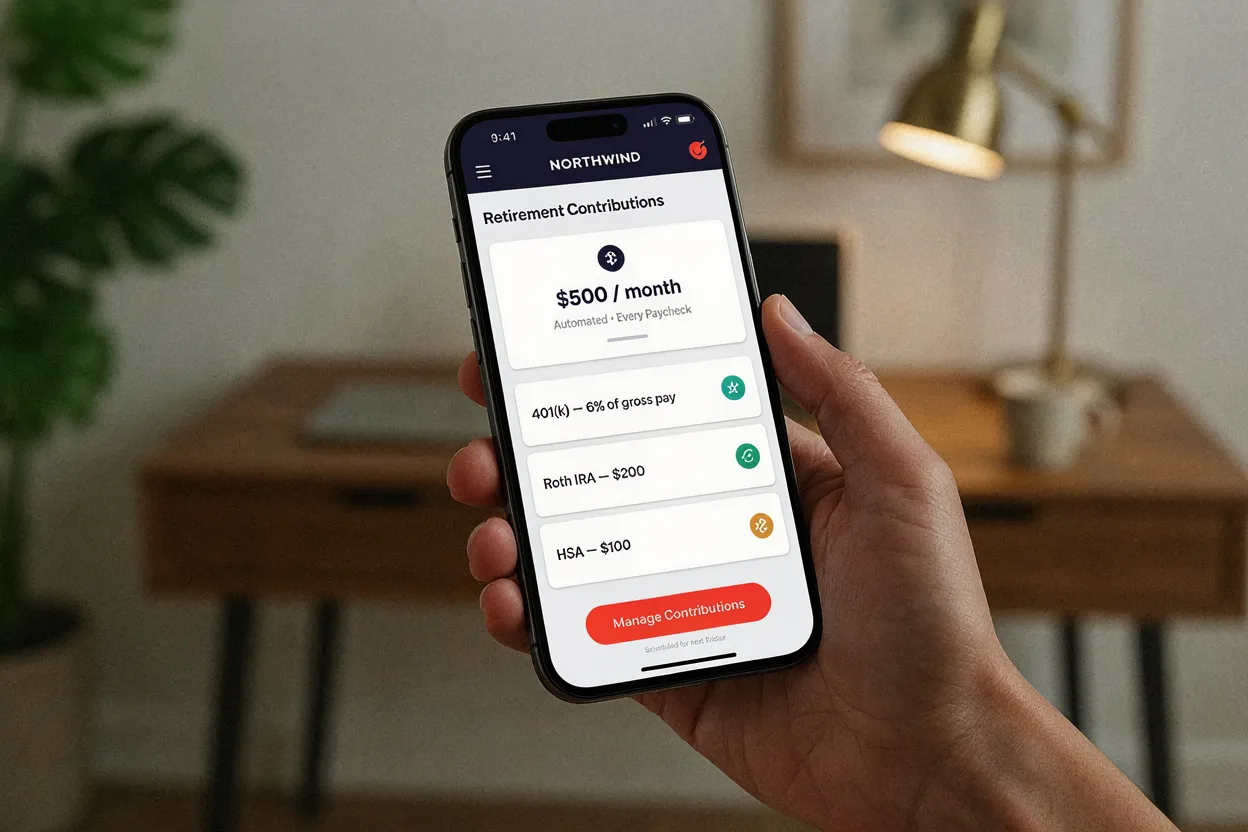
Phase 1: Get the match. Contribute enough to your 401(k) to get the full employer match. This is non-negotiable — it’s free money.
Phase 2: Fund the education. Use any extra money (bonuses, tax refunds, side hustle income) to pay for education. Avoid loans if possible — or minimize them.
Phase 3: Max out retirement. Once the education is paid for, increase your retirement contributions to the maximum ($23,000 per year for 2024, plus catch-up contributions if you’re 50+).
What I did: I kept my 401(k) at 4% (getting the full match) while I paid for the master’s degree. After graduation, I increased my contributions to 15% and have been maxing out my Roth IRA as well.
The Investopedia recommends prioritizing retirement accounts in this order: 401(k) up to the match, then Roth IRA, then back to 401(k) to max out. This strategy gives you the match, tax-free growth in the Roth, and maximum tax-deferred growth in the 401(k).

The framework: how to decide for your situation
Here’s the framework I use to decide between education and retirement:
- Calculate the employer match return. If your employer matches 100% of your 6% contribution, that’s a 100% return on 6% of your salary.
- Calculate the education ROI. Divide the cost of the degree by the expected earnings increase. If the degree costs $45,000 and increases your salary by $15,000, you’ll break even in 3 years.
- Consider your timeline. If you’re 25 and the degree increases your earnings for 40 years, the total benefit is $600,000. If you’re 50 and have 15 years left, it’s $225,000.
- Assess your risk tolerance. Education is a guaranteed investment (if you complete the degree). Retirement is subject to market volatility.
- Check your retirement savings. If you’re behind, prioritize retirement. If you’re on track, you can afford to invest in education.
The Consumer Financial Protection Bureau provides tools for evaluating retirement plan options and understanding your employer’s match. The Federal Trade Commission warns about for-profit schools that overpromise job placement rates — always research before taking on student loan debt.
Are you on track to retire? Check your numbers with our free retirement calculator.
Runs in your browser; nothing you type is stored.
Frequently Asked Questions
Should I take out loans for a master’s degree if I already have student loan debt?
It depends on the ROI. If the degree will significantly increase your earnings and you can pay off the loans within 5-10 years, it might be worth it. But if you already have $50,000+ in student loans, adding more debt is risky. Consider working for a few years, saving money, and paying for the degree out of pocket. The Federal Student Aid Office provides resources for managing existing student loan debt.
What if my employer doesn’t offer a 401(k) match?
If there’s no match, the decision shifts. You should still save for retirement — aim for 15% of your income — but you can prioritize education if the ROI is compelling. Open a Roth IRA and contribute up to the annual limit ($7,000 for 2024). The IRS provides detailed information on Roth IRA rules and benefits.
How do I know if a master’s degree will actually increase my earnings?
Research salary data for your field. The Bureau of Labor Statistics publishes earnings by education level. Talk to people in your industry who have the degree. Look at job postings — do the higher-paying positions require a master’s? If the data doesn’t show a clear earnings increase, the degree might not be worth the cost.
Can I use my 401(k) to pay for education?
You can take a 401(k) loan or withdrawal, but it’s usually a bad idea. You’ll pay taxes and penalties on withdrawals, and you’ll lose years of compound growth. 529 plans are designed for education savings and offer tax advantages. If you’re considering using retirement funds for education, consult a financial advisor first. The Department of Education provides information on education savings options.
What if I’m behind on retirement savings? Should I skip education entirely?
If you have less than 1x your salary saved for retirement by age 30, prioritize catching up. Education can wait — or you can pursue cheaper options like online courses, certifications, or employer-sponsored training. The goal is to build a foundation of retirement savings before taking on additional debt. The Federal Reserve reports that 25% of non-retired adults have no retirement savings at all — if you’re in that group, start there.
Related Reading
- Do Dave Ramsey’s Baby Steps Still Work? An Honest Assessment
- Emergency Funds to Retirement: The Full Baby Steps Sequence
- The Snowball Method for Student Loans: A Practical Guide
About Dottie Ray
Dottie Ray is a behavioral finance writer who earned a master’s degree while managing retirement savings. She writes about the intersection of psychology and money, helping people understand how to make financial decisions that balance short-term goals with long-term security. Her work has helped thousands of readers navigate the trade-offs between education, retirement, and other financial priorities.