Credit Score Qualify Most Retail Store Cards: What You Need to Know in 2025
November 23, 2026 · Alexander Whaley
Have you ever stood at a store checkout and heard, “Would you like to save 20% by opening a store credit card?” It’s a tempting offer.
Before you apply, you need to know what credit score is required to qualify. Most retail store credit cards ask for a FICO score of at least 640 (fair credit). Some cards, like the Fingerhut Credit Account, may approve applicants with scores as low as 500.

I researched many store cards and discovered they are generally easier to qualify for than traditional credit cards. Many major retailers intentionally design their store cards to be accessible to shoppers with less-than-perfect credit.
You’ll often get instant approval decisions at the register, even if you might not qualify for premium rewards cards.
Key Takeaways
- Most retail store credit cards require a fair credit score (640+), making them easier to get than traditional credit cards.
- Some store cards like the Fingerhut Credit Account accept scores as low as 500, offering options for people with poor credit.
- Store credit cards can help build credit when used responsibly but usually come with higher interest rates than standard credit cards.
Understanding Credit Scores and Retail Store Cards

Credit scores play a big role in whether you qualify for retail store cards. These specialized cards and your credit profile influence each other.
What Is a Credit Score?
A credit score is a three-digit number that shows your creditworthiness. Lenders calculate it based on payment history, amounts owed, length of credit history, new credit, and credit mix.
Most lenders use FICO Scores to review applications. Credit scores usually range from 300 to 850, with higher numbers showing better credit health.
When you apply for credit, including store cards, lenders check this score to decide if you are a risk. Your score affects whether you qualify, your interest rates, credit limits, and the terms you get.
Regularly checking your credit score is important. Many free services let you do this without lowering your score.
How Retail Store Cards Differ from Traditional Credit Cards
Retail store cards are made for use at specific stores or retail chains. Unlike traditional credit cards, store cards often accept applicants with lower credit scores because they have built-in limits.
Retail Store Cards:
- Usually have higher interest rates (often 25-30%)
- Lower credit limits
- Easier approval process
- Use is limited to the store
- Offer special store promotions and discounts
Traditional Credit Cards:
- Typically lower interest rates
- Higher credit limits
- Stricter approval requirements
- Accepted almost everywhere
- More comprehensive rewards programs
Store cards can help you build credit. They report to credit bureaus like regular cards, helping you establish credit history if you use them responsibly.
Credit Score Ranges Used by Retailers
Retail store cards use specific credit score ranges that are different from traditional cards. People with lower scores will find it harder to get credit and may receive lower limits.
Common approval thresholds:
- Poor credit (below 580): Few options, but some store cards available
- Fair credit (580-669): Many store cards accessible
- Good credit (670-739): Most store cards available with decent terms
- Excellent credit (740+): Best terms and highest limits
Most retail credit cards require at least fair credit. Some retailers offer secured options for people with poor credit history.
If you use a retail store card responsibly and make on-time payments, you can improve your credit score over time.
Credit Score Requirements to Qualify for Most Retail Store Cards
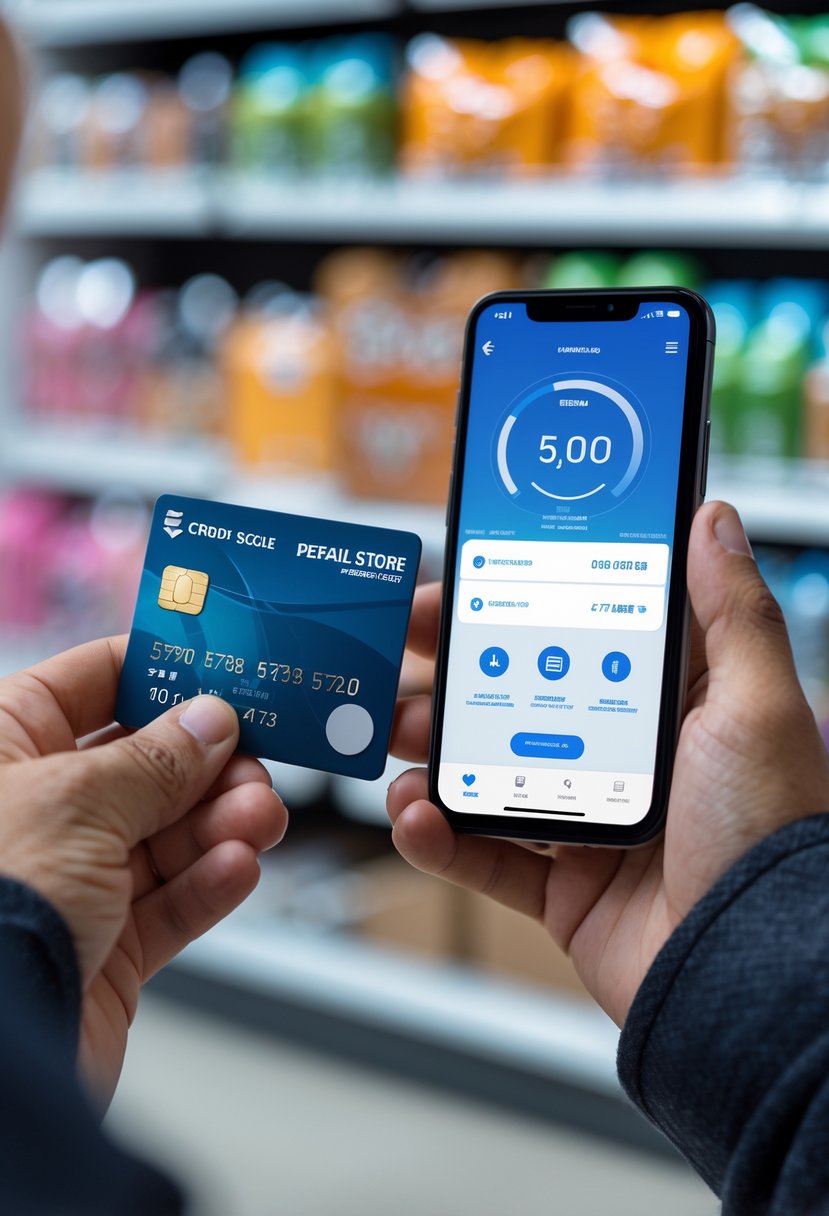
Your credit score and other financial factors determine if you get approved for retail store cards. Different stores have different requirements, and some are more flexible than traditional credit cards.
Minimum Credit Score Needed
Retail store credit cards generally have lower credit score requirements than regular credit cards. The minimum needed ranges from 500 to 670, depending on the retailer.
Some cards, like the Fingerhut Credit Account, accept scores as low as 500. This makes them available to people with poor credit.
More prestigious retail cards require higher scores. Best Buy asks for a 670+ score for their credit card but only 580+ for their store card.
Amazon offers different cards with different requirements. Most department store credit cards require at least fair credit (640+ score) for approval.
Store-only cards, which can only be used at that retailer, usually have lower requirements than co-branded cards that work anywhere.
How Lenders Assess Creditworthiness
Retailers look at more than just your credit score when you apply. They check your:
- Payment history: On-time payments show responsibility
- Income level: Shows if you can afford payments
- Debt-to-income ratio: Lower ratios are better
- Length of credit history: Longer histories give more data
Store cards accept applicants with lower credit because they have built-in limits, such as high interest rates (often 25-30%) and lower credit limits. This helps lenders manage risk.
Retailers may be more flexible with approvals during holiday shopping seasons to boost sales.
The Role of Credit Reports and Credit Bureaus
Credit bureaus like Experian provide the reports retailers use to review your application. These reports show your credit accounts, balances, payment history, length of credit history, recent credit inquiries, and any public records like bankruptcies.
When you apply for a store card, the retailer makes a “hard inquiry” on your credit report. Too many inquiries in a short time can temporarily lower your score.
Retail cards that report to credit bureaus can affect your FICO Score like any other credit account. Responsible use can build your credit, but missed payments will hurt your score.
For people with limited credit history, some store cards can help you start building credit if you use them carefully.
Key Features and Benefits of Retail Store Credit Cards

Retail store credit cards offer unique advantages for shoppers and people looking to build credit. These cards often provide special perks for loyal customers.
Rewards and Incentives
Most retail store cards give you immediate savings when you open an account. Many stores offer 10-20% off your first purchase just for signing up.
Store cards also have ongoing rewards programs. You might earn:
- Points per dollar spent at the retailer
- Cash back (usually 1-5%)
- Birthday rewards or special member-only discounts
- Free shipping on online orders
Many cards offer special financing options for big purchases. Be careful—deferred interest can be expensive if you don’t pay off the balance in time.
Most store cards have no annual fee. Unlike travel rewards cards that might charge $95 or more each year, store cards are usually free if you pay on time.
Credit Limits and Approval Odds
Retail store cards are generally easier to get than traditional credit cards. Many people with fair credit (FICO scores around 580-669) can qualify.
Initial credit limits are lower, often between $300 and $1,000. This helps issuers manage risk and gives you a chance to prove your creditworthiness.
These cards can help you build credit. Making small purchases and paying them off quickly can create a positive payment history.
If you use the card responsibly, you may get credit limit increases over time. The approval process is fast, sometimes giving instant decisions at the checkout.
Some retailers even pre-qualify shoppers with a soft credit check that doesn’t affect your score.
Best Store Card Offers
Amazon’s store card gives Prime members 5% cash back on all Amazon purchases. For frequent shoppers, this can mean big savings.
Target’s RedCard offers a steady 5% discount on almost all purchases, plus extended returns and free shipping. There is no minimum spending required for these benefits.
The Old Navy/Gap/Banana Republic card is good for clothing shoppers. It gives tiered rewards and frequent bonus point promotions.
Costco’s card is a Visa that works everywhere, but it gives extra rewards (4% back on gas, 3% on restaurants) and serves as your membership card.
Best Buy offers interest-free financing for up to 24 months on large purchases, which is helpful for electronics.
Risks and Strategies for Managing Store Credit Cards
Store credit cards can be useful, but they also come with risks. It’s important to understand interest rates, avoid debt, build credit responsibly, and compare your options.
Interest Rates and APR
Store credit cards usually have higher interest rates than traditional credit cards. Rates often range from 25% to almost 30% APR, much higher than the national average for regular credit cards.
High rates can turn small balances into large debts if you don’t pay your bill in full each month. For example, a $500 purchase at 27.99% APR would cost an extra $140 in interest if you only make minimum payments for a year.
The best approach is to pay your full balance every month. If you can’t, calculate how much interest will add to your debt before making a purchase.
Some retailers offer special financing, but be cautious with deferred interest promotions. If you don’t pay off the balance in time, you might owe a lot in interest.
Avoiding Debt and Protecting Credit
Store cards often have low credit limits. I can reach my limit quickly, which raises my credit utilization ratio and may hurt my credit score.
I protect my credit by keeping utilization below 30% of my limit. I set up automatic payments to avoid missing due dates.
I avoid opening multiple store cards in a short time. I check my statements regularly for errors or fraudulent charges.
Store cards can tempt me to overspend. I create a budget before shopping and stick to it, even if there are discount offers.
The Consumer Financial Protection Bureau advises treating store cards with the same caution as any financial product.
Building Credit with Store Cards
Using store credit cards strategically helps me build credit. These cards are often easier to qualify for than premium cards, so they work well for credit beginners.
I make small purchases and pay them off right away. This builds a positive payment history, which is 35% of my credit score.
Store cards can help people with limited or damaged credit. After 6-12 months of responsible use, I may qualify for better cards with lower interest rates and more valuable rewards.
I also consider secured cards or credit builder loans. These options may suit different credit situations and financial goals.
Comparing Store Cards to General Purpose Credit Cards
Store cards offer discounts on purchases at specific retailers. General-purpose cards like Visa or Mastercard work anywhere.
General benefits comparison:
| Feature | Store Cards | General Cards |
|---|---|---|
| Interest Rate | Often 25-30% | Typically 16-24% |
| Credit Limits | Lower ($300-$1,000) | Higher ($1,000+) |
| Rewards | Store-specific discounts | Cash back, travel rewards |
| Fees | Fewer annual fees | More fee options |
Store cards rarely offer travel rewards or premium benefits. If I shop often at a certain store, I can save money with a store card.
For everyday purchases and long-term credit building, I find traditional cards offer better value and terms.
Frequently Asked Questions
Retail store credit cards have different requirements and approval odds based on your credit profile. These common questions address score thresholds, instant approval options, and possibilities for those with less-than-perfect credit.
What minimum credit score is typically required to qualify for retail store credit cards?
Most retail store credit cards need a minimum credit score of 580-640, which is considered fair credit. Some premium store cards may require scores of 670 or higher.
Store cards are usually easier to qualify for than traditional credit cards. This makes them popular for people building or rebuilding credit.
Credit card issuers do not publicly share exact minimum scores. Approval depends on your overall credit profile, income, and current debt.
Which store credit cards offer instant approval for those with bad credit?
Fingerhut, Amazon Store Card, and Target RedCard often approve people with credit challenges. These retailers usually provide instant approval decisions online.
Department store cards like Kohl’s Charge and JCPenney credit cards also have relaxed qualification requirements. They may approve applicants with scores in the 580-620 range.
Secured retail cards are another option. They require a deposit equal to your credit limit.
Are there any department store credit cards that provide easy approval for a 580 credit score?
Yes, several department store cards are available with a 580 credit score. Stores like Burlington, Forever 21, and TJ Maxx offer cards with higher approval odds for lower scores.
The Fingerhut Credit Account targets consumers with scores around 580 or below. Store cards from Macy’s and Old Navy have also approved applicants in this range.
Checking for pre-qualification options first can help you avoid unnecessary hard inquiries on your credit report.
Can you obtain a store credit card with a poor credit history without a deposit?
Yes, many retail store cards are unsecured and do not require a deposit, even for applicants with poor credit. These cards can help build credit if used responsibly.
Store cards from Fingerhut, Montgomery Ward, and some clothing retailers often approve applicants with poor credit without a security deposit.
These cards usually have higher interest rates and lower credit limits to offset the risk of lending to those with lower scores.
What are the options for soft pull department store credit cards that offer pre-approval?
Several retailers offer pre-approval through soft credit pulls that do not affect your credit score. Macy’s, Victoria’s Secret, and Kohl’s often provide this option online.
Department stores like Nordstrom and Dillard’s also offer pre-qualification tools. These tools let you check your chances of approval without a hard inquiry.
Pre-approval does not guarantee final approval, but it gives you a good idea of your chances without impacting your credit score.
Is it possible to receive a retail card like Walmart’s with a credit score of 580?
Yes, Walmart sometimes approves applicants with credit scores around 580 for their store card.
The Capital One Walmart Rewards card usually requires a higher credit score.
The traditional Walmart store card is for people with fair or building credit. This makes it easier to get if your score is lower.
Try to have a stable income and keep your other credit balances low. This can help your chances of getting approved with a 580 score.

Alexander Whaley: Global Sales Leader, Scientist, and pragmatic Financial Mentor dedicated to empowering individuals and organizations to achieve financial health and strategic success. Leveraging a proven track record in international sales leadership—including P&L and pricing responsibility—and decades of personal financial discipline (note: insights based on experience, not certified financial advice), I specialize in guiding others through real-world financial complexities towards sustainable stability. Whether mentoring individuals out of debt, advising start-ups, leading high-performing teams, or sharing insights on StraightFireMoney.com and Upskill2Own.com, my mission is to help others unlock practical strategies and achieve lasting impact.