Should You Use Reward Points To Pay Bills: A Strategic Financial Decision
September 3, 2026 · Alexander Whaley
I still remember the moment when I stared at my pile of bills, wondering if I should use my 10,000 credit card points to help cover my expenses. It seemed like an easy solution, but I hesitated. Most credit card rewards programs offer the option to use points for bill payments, but this method typically provides less value than other redemption options. Using reward points to pay bills is generally not the best use of your hard-earned points, as they’re often worth more when redeemed for travel or converted to cash first.

Many rewards credit cards give you different values for your points depending on how you use them. For example, points used directly for bill payments might be worth only 0.7 cents each, while the same points redeemed for cash (which you can then use to pay bills) might be worth 1 cent each. This small difference adds up quickly when you’re dealing with thousands of points.
Key Takeaways
- Redeeming reward points directly for bill payments typically offers lower value than other redemption options.
- Converting points to cash before paying bills often provides better value for your rewards.
- Creating a strategic plan for your credit card rewards can maximize benefits while still helping with everyday expenses.
Understanding Reward Points and Their Valuation

Reward points systems vary widely across credit cards, with each point potentially worth between 0.5 to 2 cents depending on how you use them. The true value of your points depends on understanding their worth and choosing optimal redemption options.
Evaluating Rewards Programs and Points
Credit card rewards programs typically offer points, miles, or cash back for every dollar you spend. I’ve found that the best programs provide flexible redemption options without complicated restrictions. When comparing programs, I look at the earning rate – how many points you earn per dollar spent in different categories.
Many cards offer enhanced earnings in bonus categories like dining, travel, or groceries. For example, you might earn 1 point on regular purchases but 3-5 points at restaurants or gas stations.
A generous welcome bonus can jumpstart your rewards balance. These sign-up bonuses often require spending a certain amount within the first few months. Before applying, I always check if the annual fee is offset by the benefits I’ll actually use.
Calculating Redemption Value
To determine if you’re getting good value, I use this simple formula:
- Value = (Cost in dollars ÷ Points required) × 100
This gives you cents-per-point value. Anything above 1 cent per point is generally decent, while 1.5+ cents is excellent.
Rewards values typically hover around 1 cent per point, but this varies based on your redemption choice. I’ve noticed that redemption options like statement credits often provide lower value (0.5-0.8 cents per point) than travel bookings.
Points values can fluctuate based on:
- The rewards program
- How you redeem (travel, cash back, gift cards)
- Special promotions or transfer bonuses
Comparing Points to Real-World Currency
When deciding whether to use points for paying bills, I compare their value against cash. Rewards points often provide better value for travel than bill payments. This is because travel redemptions typically value points at 1-2 cents each, while bill payments might only give 0.6-0.8 cents of value.
For example, 10,000 points might cover:
- $100 in travel expenses (1 cent/point)
- Only $60 in bill payments (0.6 cents/point)
I avoid redeeming points for statement credits unless the value matches at least 1 cent per point. This is considered the minimum acceptable value for most rewards.
If you’re carrying a credit card balance, prioritize paying that off before chasing rewards. The interest costs will almost always exceed any rewards earned.
Strategic Use of Reward Points for Bill Payments

Using reward points to pay bills can be a smart financial move if done correctly. The key lies in understanding when it’s advantageous to use points for bills versus saving them for other redemption options.
Maximizing Bill Payments with Reward Points
I’ve found that the best strategy for using reward points on bills starts with targeting high-value redemptions. Not all bills offer the same return when paid with points. For example, utility bills often provide lower value compared to other expenses.
When I redeem points for statement credits, I check the conversion rate first. Some credit cards offer 1 cent per point for statement credits, while others might offer only 0.7 cents per point.
Here’s a quick comparison of typical redemption values:
| Bill Type | Typical Point Value |
|---|---|
| Statement Credits | 0.7-1.0 cents per point |
| Utility Bills | 0.6-0.8 cents per point |
| Recurring Subscriptions | 0.7-1.0 cents per point |
I always pay attention to promotional periods. Some card issuers occasionally boost redemption rates for bill payments.
Avoiding Common Pitfalls
The biggest mistake I see people make is redeeming points for bill payments without checking the value. Points often provide better value when used for travel rather than bill payments.
Be cautious of minimum redemption thresholds. Some programs require you to redeem a minimum number of points (often 2,500 or 5,000), which can lead to inefficient use.
Watch out for these red flags:
- Redemption rates below 0.7 cents per point
- Processing fees for using points
- Points that expire shortly after redemption
I avoid using premium travel card points (like Chase Ultimate Rewards or Amex Membership Rewards) for everyday expenses since they’re typically worth more when transferred to travel partners.
When to Choose Other Redemption Options
I recommend saving points for travel when the redemption value exceeds 1.5 cents per point. Many travel rewards offer 2-3 cents per point in value, making them significantly better than the 1 cent or less typically offered for bill payments.
Gift cards sometimes offer better redemption values than direct bill payments. During promotions, I’ve seen gift card redemptions reach 1.25 cents per point.
For maximizing cashback, consider these alternatives:
- Travel redemptions (typically 1.5-3.0 cents per point)
- Gift cards during promotional periods (1.0-1.25 cents per point)
- Merchandise with special discounts
If you’re carrying a balance with high interest rates, using points to reduce that debt almost always makes financial sense, even at lower redemption rates. Paying credit card bills with points can be smart when interest charges would otherwise eat away at your finances.
Leveraging Credit Card Features for Optimal Benefits
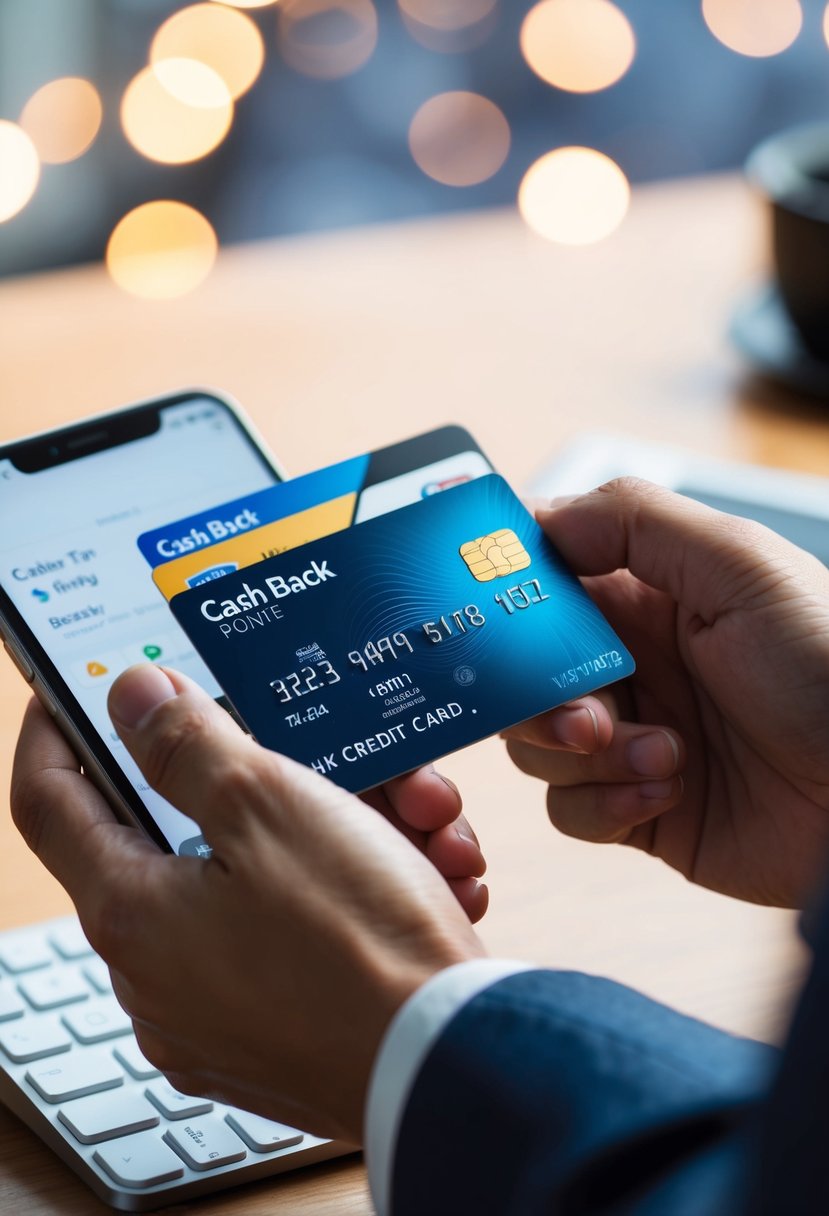
Getting the most from your rewards cards means understanding how to maximize features beyond just paying bills. I’ve found specific strategies that can significantly increase your point earnings when used strategically.
Exploring Bonus Categories and Sign-Up Offers
The fastest way to accumulate points is through welcome bonuses. Many rewards credit cards offer 50,000+ points after spending a certain amount within the first few months. I recommend tracking your regular spending to ensure you’ll meet these thresholds naturally without overspending.
Rotating bonus categories are another powerful tool. Some cards offer 5x points on groceries one quarter, then restaurants the next. I keep a small note in my wallet showing which card to use for which category each month.
Most importantly, match your spending patterns to the right card. If I spend heavily on groceries, I choose a card offering ongoing bonuses in that category rather than one prioritizing travel purchases.
Key bonus categories to look for:
- Groceries (typically 2-5% back)
- Gas stations (2-3% back)
- Dining (3-5% back)
- Travel (2-5% back)
Utilizing Shopping Portals and Mobile Banking
Shopping portals can double or even triple your rewards on everyday purchases. When I need to buy something online, I first check if my credit card has a portal where I can earn bonus points.
For example, by shopping at Nike through Chase’s portal, I might earn 3 extra points per dollar on top of my card’s regular rewards. These portals are completely free to use and require just one extra click before checkout.
Mobile banking apps offer additional benefits. I use features like:
- Purchase notifications: Immediate alerts help me track spending
- Category spending analysis: Shows where my money goes each month
- Point redemption options: Often easier to manage through apps
Many apps also offer special deals like “spend $50 at Restaurant X, get 500 bonus points” that aren’t available elsewhere.
Travel Perks and How They Weigh Against Bill Payments
While paying bills earns steady points, travel rewards often deliver the highest value per point. I’ve found that points redeemed for travel frequently return 1.5-2 cents per point versus 1 cent for bill payments.
Premium cards offer impressive travel perks that offset their annual fees:
- Airport lounge access: Free food, drinks, and comfortable seating
- TSA PreCheck/Global Entry credits: $85-100 value every 4-5 years
- Travel insurance: Trip cancellation, rental car coverage
- No foreign transaction fees: Saving 3% on international purchases
When deciding whether to use points for bills or save them for travel, I calculate the cent-per-point value. If statement credits value points at less than 1 cent each, I avoid that redemption option and save for travel instead.
Balancing Short-Term Gains with Long-Term Value
I’ve learned that using points to pay bills may offer immediate satisfaction. However, this must be weighed against potential long-term benefits. Some rewards programs offer greater value when redeemed for travel or specific merchandise.
When evaluating options, I consider:
- Redemption rates: Points used for statement credits typically offer lower value (0.5-1 cent per point)
- Promotional offers: Limited-time point-based payment options may provide better value
- Account flexibility: Programs allowing point transfers between accounts can maximize value
Cash-back rewards typically offer consistent value regardless of how I redeem them. This makes them particularly useful for bill payments when necessary.
I maintain a sustainable rewards strategy by accumulating points through regular spending rather than increasing expenses just to earn rewards.
Frequently Asked Questions
Credit card rewards programs offer various options for using points to pay bills. These programs have specific advantages, drawbacks, and best practices that can help maximize your benefits.
What are the advantages of using credit card points to pay bills?
Using credit card rewards to pay bills can provide immediate financial relief. You’re essentially getting a discount on your purchases when you apply points toward bill payments.
Points used for bills help reduce your out-of-pocket expenses. This can be especially helpful during tight financial months or when unexpected expenses arise.
You also eliminate the risk of points expiring by putting them to practical use. Many reward programs have expiration dates, so using points for bills ensures you get value from them.
What are the best practices for redeeming credit card points effectively?
I recommend choosing cards that offer rewards on your regular spending categories. This ensures you’re maximizing rewards on things you already buy.
Compare redemption values across different options before deciding. Some cards offer greater value when points are used for travel versus bill payments.
Pay attention to promotional periods when redemption values might increase. Card issuers occasionally offer bonus value when redeeming points in specific categories.
Are there any drawbacks to using rewards cash for bill payments?
Point values are often lower when used for bill payments compared to travel or merchandise. You might get less value per point than with other redemption options.
Some bills can’t be paid directly with credit card points. This limitation means you might need to use the statement credit option instead, which can be less flexible.
Redemption minimums can be an obstacle. Many programs require you to accumulate a minimum number of points before you can redeem them for bill payments.
Is it more beneficial to save up reward points or to use them as they are earned?
I find that saving points can be advantageous for high-value redemptions. Travel rewards often deliver better value when accumulated and used for premium flights or hotel stays.
Using points immediately protects against potential point devaluation. Card issuers sometimes change their reward structures, making points worth less over time.
Your financial situation should guide this decision. If reducing monthly expenses is a priority, using points for bills makes more sense than saving for future travel.
How do credit card rewards programs typically allow for direct bill payment?
Many programs offer statement credits that can offset any charge on your card. You make the payment with your card, then apply points to reduce your balance.
Some issuers have partnerships with utility companies and service providers. These partnerships allow direct point redemption for specific bills.
Card portals might include bill payment categories where you can select providers and apply points directly. The process varies by issuer but is typically managed through your online account.
How does using points to pay credit card bills affect reward point value?
Statement credits usually offer lower value per point than premium redemptions. For example, points might be worth 1 cent for statement credits but 1.5 cents for travel.
The conversion rate is typically straightforward and transparent. Most programs clearly state how many points equal a specific dollar amount when applied to your bill.
Earning reward points is independent of when you pay your card. You earn points based on purchases regardless of whether you later use points to pay your bill.