
I had $8,247 in credit card debt and $0 in savings. Every paycheck, I faced the same question: should I put this money toward my debt or build an emergency fund? The math said pay off the debt — the interest was killing me. But my gut said save something — what if something broke? I spent six months researching, talking to financial advisors, and experimenting with both approaches. Here’s what I learned.
The answer isn’t either/or — it’s both. But the order matters. If you put all your money toward debt and leave yourself with zero savings, one unexpected expense sends you right back into debt. If you save aggressively and ignore your debt, the interest compounds and you stay in the hole longer.

Here’s what I learned after paying off $8,247 in debt while building a $3,000 emergency fund: you need to do both, but the sequence matters. Start with a small emergency fund ($1,000), then attack the debt, then build the full emergency fund. This approach prevents you from taking two steps forward and one step back. This article walks through the exact framework I used, the math behind each decision, and how to adapt it to your situation.
Why you need both (and why most people choose wrong)
Most people choose one or the other. They either throw every extra dollar at debt and have zero savings, or they save aggressively and let their debt compound. Both approaches have problems.
The debt-first approach: You pay off $8,000 in credit card debt over 18 months. You’re debt-free! Then your car breaks down. You have zero savings, so you put the $1,200 repair on a new credit card. You’re back in debt. This is the cycle that keeps people trapped.
The savings-first approach: You save $10,000 over two years. You feel secure! But your credit card debt grew from $8,000 to $11,000 because of 22% interest. You’ve saved $10,000 but owe $11,000. You’re still underwater.
The Federal Reserve’s Report on the Economic Well-Being of U.S. Households found that 37% of adults couldn’t cover a $400 emergency without borrowing or selling something. If you’re in that group, you need an emergency fund — even if you have debt.
What I did: I used a hybrid approach. I saved $1,000 first, then threw every extra dollar at debt, then built my emergency fund to $3,000 over the next six months. Here’s how it worked.
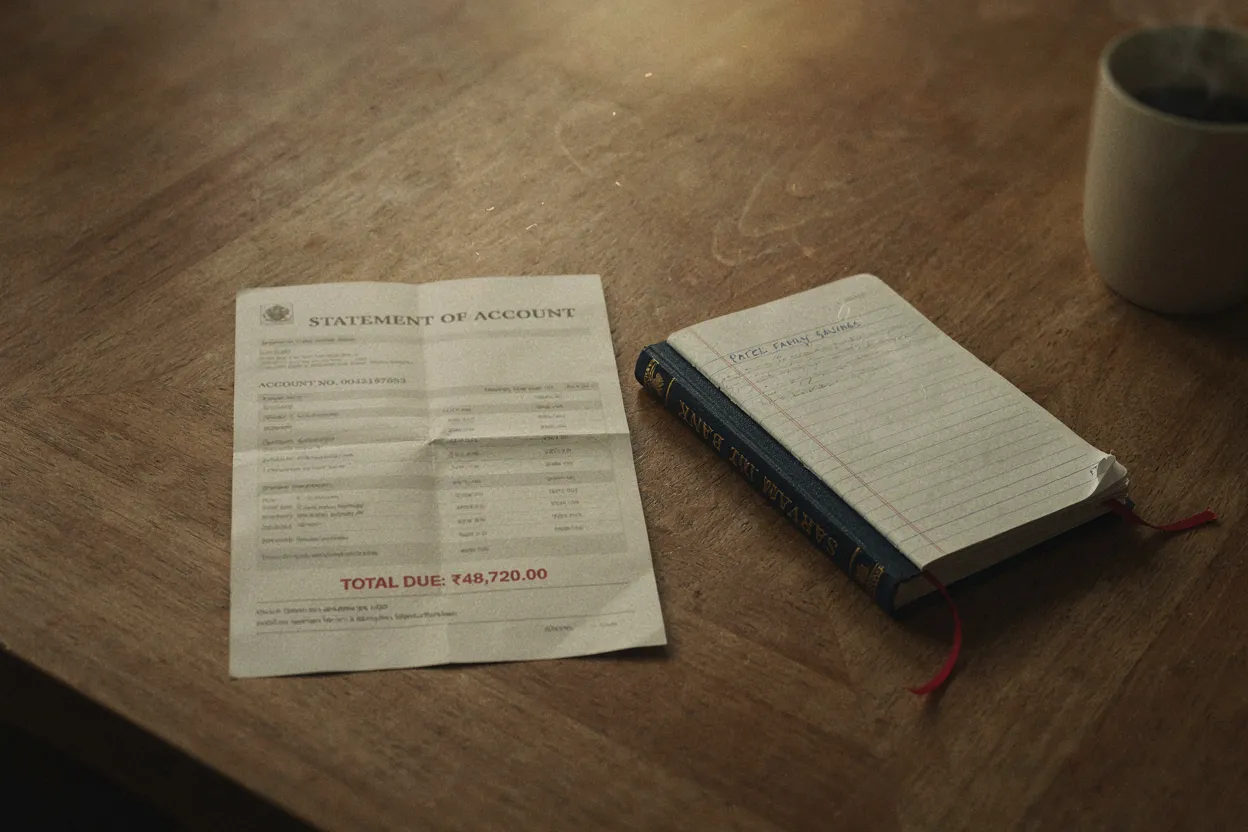
The hybrid framework: emergency fund + debt payoff
Here’s the framework I recommend (and used myself):
- Save $1,000 starter emergency fund. Before doing anything else, save $1,000. This is your buffer against new debt. It takes 2-8 weeks depending on your income and expenses.
- Pay minimums on all debts. While you’re building the $1,000, make minimum payments on all your debts to avoid penalties and credit score damage.
- Attack the smallest debt with everything else. Use the debt snowball method: list debts from smallest to largest. Pay minimums on everything except the smallest debt. Throw every extra dollar at that debt until it’s gone.
- Roll payments into the next debt. Once the smallest debt is paid off, take the payment you were making on it and add it to the next smallest debt. Repeat until all debts are paid.
- Build the full emergency fund. Once you’re debt-free (except mortgage), redirect all that debt-payment money into your emergency fund. Aim for 3-6 months of expenses.
What I did: I saved $1,000 in three weeks by cutting dining out and selling stuff. Then I paid minimums on my three credit cards ($847, $2,341, and $5,059) while throwing $400/month at the $847 card. It took 4 months to eliminate. Then I rolled that $400 into the $2,341 card and killed it in 8 months. Then I attacked the $5,059 card with $800/month and paid it off in 9 months. Total debt payoff time: 21 months.
After paying off the last credit card, I redirected that $800/month into my emergency fund. Six months later, I had $4,800 saved — more than enough to cover my monthly expenses.

The math: why this approach works
Let’s run the numbers. Suppose you have $8,000 in credit card debt at 22% interest and $0 in savings. You can afford to pay $500/month toward your financial goals.
Debt-only approach: You pay $500/month toward debt. It takes 20 months to pay off $8,000. You pay $1,847 in interest. But when your car breaks down in month 12, you have to put the $800 repair on a credit card. You’re back in debt.
Savings-only approach: You save $500/month. After 20 months, you have $10,000 saved. But your debt grew to $10,400 because of interest. You’re still underwater by $400.
Hybrid approach: You save $1,000 first (2 months), then pay $500/month toward debt. It takes 22 months to pay off $8,000. You pay $1,923 in interest — slightly more than the debt-only approach. But you have a $1,000 emergency fund the entire time. When your car breaks down in month 12, you use your emergency fund. You’re still debt-free 8 months later.
The NerdWallet recommends starting with a $500-$1,000 emergency fund before tackling debt. The extra interest you pay is worth the peace of mind and protection against new debt.

How much emergency fund do you need before attacking debt?
The standard advice is $1,000 for a starter emergency fund. But is that enough? Here’s how to decide:
Save $1,000 if:
- You have a stable job with reliable income
- You have a dual-income household
- Your car is reliable and under 100,000 miles
- You’re generally healthy with good insurance
Save $2,000-$3,000 if:
- You have dependents (kids, aging parents)
- You’re self-employed or work on commission
- Your car is old or high-mileage
- You have a health condition or high deductible
The Investopedia recommends keeping your starter emergency fund in a separate, liquid account where you can access it quickly but won’t be tempted to spend it. A high-yield savings account is perfect — it earns 4-5% APY and is FDIC-insured.
What I did: I saved $1,000 because I had a stable job, no dependents, and a reliable car. If I had kids or a clunker car, I would have saved $2,000.

When to break the rules
The hybrid framework works for most people. But there are exceptions:
If you have high-interest debt (over 25% APR): Consider tackling that first. Some payday loans or credit cards charge 30%+ interest. The math works better if you eliminate that debt immediately, even if it means starting with a smaller emergency fund ($500 instead of $1,000).
If you have a medical emergency: Don’t wait. Use your emergency fund or even go into debt to cover medical expenses. Health comes first. You can rebuild your savings and tackle debt later.
If you’re about to lose your job: If you know layoffs are coming, prioritize savings over debt. Having 3-6 months of expenses saved will keep you afloat while you job hunt.
The Consumer Financial Protection Bureau provides resources for building emergency savings and managing debt. The Federal Trade Commission warns about debt relief scams that promise to eliminate your debt for a fee — if it sounds too good to be true, it probably is.
See your debt-free date, snowball vs. avalanche, with our free debt payoff calculator.
Check your budget against 50/30/20 and size your emergency fund with our free budget calculator.
Runs in your browser; nothing you type is stored.
Frequently Asked Questions
What if I already have some savings? Should I use it to pay off debt?
If you have more than 6 months of expenses saved, consider using the excess to pay off high-interest debt. But keep at least 3-6 months of expenses as your emergency fund. The FDIC recommends keeping emergency savings in a federally insured account where you can access it within 1-3 business days.
Can I use a balance transfer credit card to pay off debt faster?
Yes, if you have good credit. Balance transfer cards often offer 0% APR for 12-18 months, which can save you thousands in interest. But be careful: if you don’t pay off the balance before the promotional period ends, you’ll be hit with high interest. Only do this if you’re confident you can pay it off in time. The IRS provides information on managing various types of debt.
What if my employer offers a 401(k) match? Should I prioritize that over debt?
Yes. If your employer offers a 401(k) match, contribute enough to get the full match before tackling debt. That’s a guaranteed 100% return on your money — no debt payoff can beat that. After getting the match, focus on debt using the hybrid framework. The Employee Benefit Research Institute reports that 91% of employers offer retirement plans with matching contributions.
How do I stay motivated when debt payoff feels slow?
Celebrate small wins. Paid off a $500 credit card? Treat yourself to a $20 reward (not more). Use the debt snowball method — paying off small debts first gives you psychological momentum. Track your progress visually with a chart or app. The Harvard Business Review found that people who focus on small wins are 15% more likely to complete their debt payoff journey.
What if I have student loans? Should I include them in the debt snowball?
It depends. If your student loans have low interest rates (under 5%), pay minimums while focusing on high-interest credit card debt. If your student loans have high interest rates (over 7%), include them in the snowball. The Federal Student Aid Office provides resources for understanding your repayment options.
Related Reading
- Do Dave Ramsey’s Baby Steps Still Work? An Honest Assessment
- Emergency Funds to Retirement: The Full Baby Steps Sequence
- The Snowball Method for Student Loans: A Practical Guide
About Dottie Ray
Dottie Ray is a behavioral finance writer who paid off $8,247 in credit card debt while building a $3,000 emergency fund. She writes about the intersection of psychology and money, helping people understand how to balance debt payoff with emergency savings. Her work has helped thousands of readers break the debt cycle and build financial security.