Red Flags When Picking Credit Card: Avoid These Common Pitfalls
October 8, 2026 · Alexander Whaley
I still remember the day I got my first credit card offer in the mail. The glossy brochure promised amazing rewards and benefits, but I nearly missed several warning signs that would have cost me hundreds in fees. When choosing a credit card, knowing the red flags to watch for can save you from financial headaches and help you find a card that truly fits your needs.

Many credit cards come with hidden traps like excessive fees, sky-high interest rates, and complicated reward programs designed to confuse rather than benefit you. I’ve learned that the best credit cards are transparent about their terms, help build your credit history, and align with your spending patterns without charging unnecessary fees.
Key Takeaways
- Watch for credit cards with excessive fees, extremely high interest rates, and limited credit reporting that won’t help build your credit score.
- Choose cards with clear terms, reasonable fees, and security features that protect your personal information.
- Avoid applying for too many cards at once as this can damage your credit score and raise red flags with issuers.
Understanding the Basics of Credit Scores and Reports
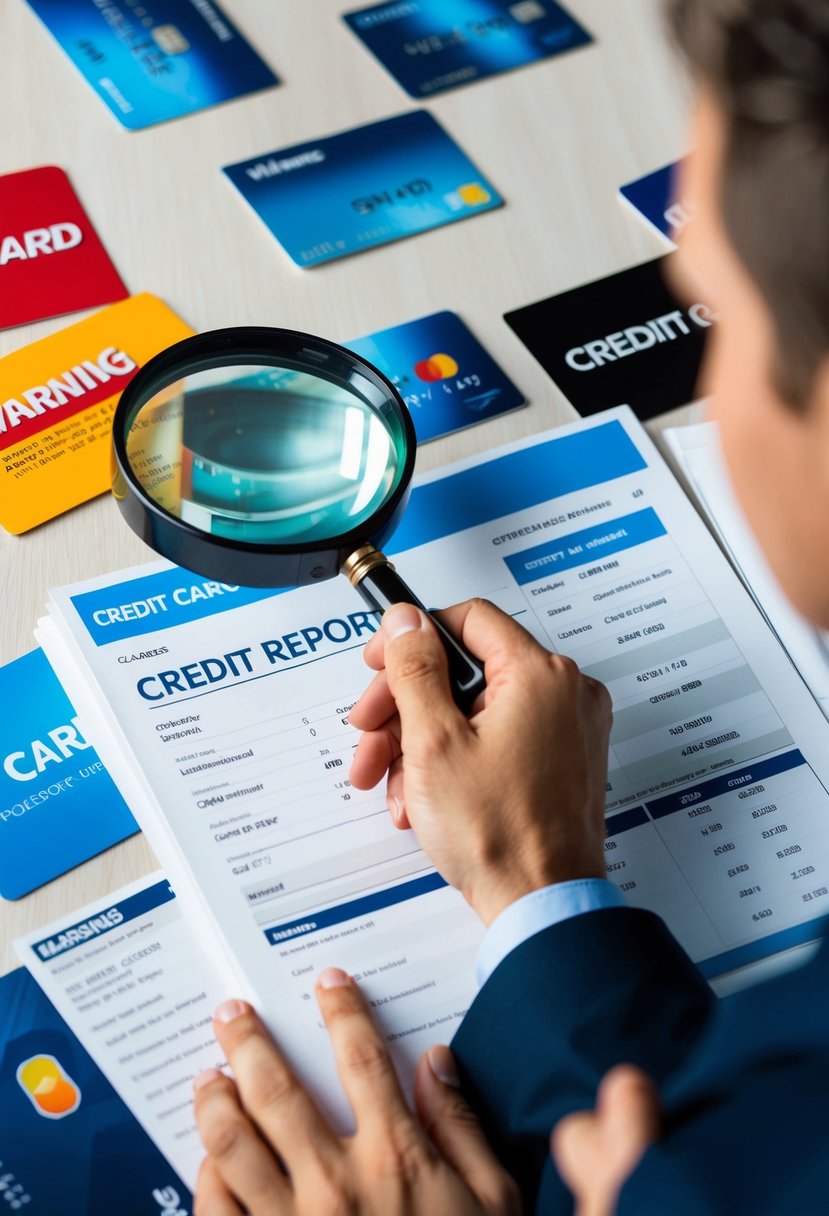
Credit scores and reports are vital tools that lenders use to evaluate your financial trustworthiness. They contain crucial information about your borrowing habits and payment history that can make or break your chances of getting approved for a credit card.
Recognizing the Role of Credit History
Your credit history is a record of how you’ve handled debt over time. It includes information about loans, credit cards, and other financial accounts you’ve opened. Lenders review this history to predict how you’ll manage future credit.
A longer credit history generally helps your score, showing you have experience managing debt. I recommend maintaining older accounts even if you don’t use them often, as they add valuable length to your credit history.
Payment history makes up 35% of your credit score—the largest factor. Even a single missed payment can damage your score for up to seven years. Set up automatic payments to avoid late payments.
New accounts can temporarily lower your score, so I suggest spacing out applications for new credit cards.
Interpreting Your Credit Score
A credit score is a number—typically between 300 and 850—that represents your creditworthiness. Most lenders use the FICO scoring model, where higher scores indicate lower risk.
Here’s what different score ranges typically mean:
- 750+: Excellent
- 700-749: Good
- 650-699: Fair
- 600-649: Poor
- Below 600: Very poor
Credit utilization (how much of your available credit you’re using) accounts for about 30% of your score. I recommend keeping utilization below 30% of your total credit limit.
Too many inquiries within a short period can signal financial distress to lenders. Each hard inquiry might lower your score by a few points.
Analyzing the Details in Your Credit Report
Your credit report contains detailed information about your financial accounts, payment history, and personal information. I recommend checking your reports from all three major bureaus (Equifax, Experian, and TransUnion) at least once a year.
Look for red flags like misspelled names, unfamiliar addresses, or incorrect Social Security numbers. These could indicate errors or identity theft.
Review your report for accounts you don’t recognize. Unfamiliar accounts might be signs of fraud. Also check that payment histories accurately reflect your payment behavior.
You have the right to dispute errors on your credit report. Contact both the credit bureau and the company that provided the information if you find mistakes.
Identifying Risk Factors in Credit Card Offers
When I shop for credit cards, I look beyond flashy marketing to find the real value. Credit card offers often hide risks in the fine print that can cost me money and damage my financial health over time.
Spotting High-Interest Rates and Hidden Fees
I always check the Annual Percentage Rate (APR) first. Cards with exorbitant interest rates can trap me in debt if I carry a balance. A rate significantly above the national average is a clear warning sign.
Hidden fees can quickly add up. I watch for:
- Annual fees: Some cards charge $95-$550 yearly just for ownership
- Balance transfer fees: Usually 3-5% of the transferred amount
- Foreign transaction fees: Typically 3% on overseas purchases
- Late payment fees: Often $25-$40 per occurrence
Random assortments of fees signal a predatory card. I read the terms and conditions carefully, especially sections labeled “Rates and Fees” or “Pricing Information.”
Evaluating Credit Limit Offers
A too-low credit limit can damage my credit utilization ratio. I look for cards that offer limits appropriate for my spending needs and income level.
Some issuers advertise high limits but deliver much less after approval. I research typical limits for my credit profile before applying to set realistic expectations.
I also check if the card offers:
- Regular credit limit increases: Good issuers review and raise limits automatically
- Clear path for requesting increases: Simple processes for when I need more purchasing power
- No additional fees for limit increases: Some predatory cards charge for this standard service
Cards with no upgrade path are concerning as they limit future growth with the issuer.
Assessing Rewards and Incentive Programs
I carefully evaluate rewards programs to ensure they match my spending habits. Points, miles, or cashback should align with where I actually spend money.
Red flags in rewards programs include:
- High spending thresholds: Requirements to spend thousands before rewards activate
- Complex redemption processes: If I need a spreadsheet to understand how to use rewards
- Short expiration periods: Points that vanish before I can use them
- Devaluation history: Issuers known for reducing point values over time
I calculate the effective reward rate by dividing annual rewards by annual spending. This helps me compare offers objectively.
Sign-up bonuses can be enticing, but I’m wary of offers requiring enormous initial spending. The best rewards programs provide consistent value long after the welcome bonus is gone.
Red Flags Related to Privacy and Security

Privacy and security should be top priorities when selecting a credit card. I often look for specific indicators that show whether a company takes these matters seriously or if they might put my personal information at risk.
The Relevance of a Comprehensive Cookie Policy
A clear cookie policy is a window into how seriously a credit card company treats your data. I always check if the provider has an easily accessible cookie policy on their website.
Red flags appear when companies have vague policies or make it difficult to understand what cookies they use. A trustworthy credit card provider will:
- Clearly explain what cookies they collect
- Specify how long cookies remain active
- Allow you to manage your cookie preferences
- Not force you to accept all cookies for basic site functionality
When a company lacks transparency about their cookie usage, they might be collecting more data than necessary. This could indicate they’re more focused on personalised advertising than on respecting your privacy choices.
Understanding How Personal Data Is Utilized
How a credit card company handles your personal data reveals much about their integrity. I always review their privacy policy before applying.
Warning signs include:
- Vague descriptions about how they use your data
- No clear opt-out options for data sharing
- Excessive data collection beyond what’s needed for service
- Sharing data with numerous third parties
Credit card companies must explain if they use your information for audience research or service development. If they don’t clearly state how long they keep your data or don’t offer simple ways to access your information, I consider these serious red flags.
The Federal Trade Commission requires financial institutions to implement identity theft prevention programs, so companies should be transparent about these protections.
The Importance of Authentication and Fraud Prevention
Strong security measures are essential for protecting your credit card information. I look for robust authentication methods when evaluating card providers.
Effective security includes:
- Multi-factor authentication options
- Clear fraud monitoring procedures
- Prompt notification systems for suspicious activities
- Easy ways to report potential fraud
When a company relies solely on passwords without additional security layers, this raises concerns. Strong providers implement sophisticated systems to detect warning signs of potential identity theft.
I’m wary when a company doesn’t explain their fraud detection measures or doesn’t offer immediate card freezing options. The absence of clear security protocols or suspicious transaction monitoring suggests the company may not have invested sufficiently in protecting your financial information.
Financial Indicators and External Factors
Understanding your financial situation and how lenders view your digital footprint can help you avoid credit cards with hidden traps. These factors often determine what offers you receive and the terms you qualify for.
Deciphering the Effects of Income and Loans on Creditworthiness
Your income plays a crucial role in determining which credit cards you can qualify for. Many card issuers use income requirements to set your credit limit. If a card offers a very low limit compared to your income, this could be a red flag.
Existing loans affect your debt-to-income ratio, a key metric lenders evaluate. I recommend checking this ratio before applying for new cards. If it’s above 30%, you might face higher interest rates or fees.
Watch out for cards that don’t adapt to your improving financial situation. Some predatory lenders offer no upgrade path even when your income increases or you faithfully make payments.
Key Warning Signs:
- Card limits significantly below industry standards for your income bracket
- Inability to increase limits despite income growth
- No graduation options from secured to unsecured cards
Assessing the Role of Search Data and IP Address
Your digital footprint influences the credit card offers you receive. When I browse financial websites, algorithms track my search data to target specific products toward me.
Be cautious of offers that appear immediately after searching for terms like “bad credit” or “quick credit approval.” These targeted offers often come with exorbitant interest rates or hidden fees.
Your IP address can reveal your location, which some predatory lenders use to target vulnerable populations. I’ve noticed that accessing financial sites from different locations can yield dramatically different card offers.
Digital Red Flags:
- Sudden email offers after financial searches
- Location-specific predatory offers
- Cards marketed specifically based on recent financial hardship searches
- Aggressive retargeting ads promising “guaranteed approval”
Frequently Asked Questions
Credit cards come with various terms and potential pitfalls that consumers should watch for. Understanding these warning signs helps you make better financial decisions and avoid costly mistakes.
What are the warning signs of a disadvantageous credit card offer?
When evaluating credit card offers, I look for excessive fees as a primary red flag. Annual fees, balance transfer fees, and foreign transaction charges can quickly add up.
I also pay attention to cards with unusually high APRs compared to current market averages. These rates make carrying a balance extremely expensive.
Credit cards with low credit limits relative to your spending needs can be problematic. They may restrict your purchasing power and potentially harm your credit utilization ratio.
How can hidden fees impact your credit card choice?
Hidden fees can transform a seemingly good credit card into an expensive financial burden. I’ve found that unnecessary fees like inactivity charges, paper statement fees, and expedited payment fees quickly erode any card benefits.
Some cards advertise “no annual fee” but include an assortment of random fees for basic services. These might include customer service calls, online account access, or even account maintenance.
Over time, these fees can cost hundreds of dollars annually, making rewards or benefits essentially worthless. I always calculate the total potential fee burden before applying.
What should you know about the interest rates and APR before applying for a credit card?
I always check if a card has exorbitant interest rates compared to industry averages. Some predatory cards charge 30% or higher when the average might be around 20%.
Understanding the difference between introductory and standard APRs is crucial. Many cards offer 0% introductory rates that jump significantly after the promotional period ends.
I also look at how interest is calculated and if there are penalty APRs. Some cards apply penalty rates of 29.99% or higher if you miss a payment, potentially lasting indefinitely.
What factors indicate a credit card may have poor reward programs or benefits?
I’m cautious about rewards programs with quick expiration dates on points or miles. Quality programs give you adequate time to accumulate and use your rewards.
Complex redemption requirements or high redemption thresholds signal potentially poor value. If I need to accumulate 50,000 points before redeeming anything, the card may not be practical.
I also look for changing terms in the rewards structure. Cards that frequently devalue points or add restrictions to benefits demonstrate they’re willing to reduce value after acquiring customers.
How can understanding a credit card’s penalty policies prevent future issues?
Knowing a card’s late payment penalties helps me avoid unexpected costs. Some cards charge up to $40 for late payments plus apply penalty APRs that can persist indefinitely.
I check for over-limit fees and automatic enrollment in over-limit protection. Without this knowledge, a single transaction could trigger substantial fees.
Understanding grace periods is equally important. Cards with shorter grace periods or those that eliminate grace periods after a late payment can cause interest charges to accumulate rapidly.
Why is it important to read the fine print regarding a credit card’s terms and conditions?
The fine print reveals critical details about limited credit reporting. Some subprime cards only report to one or two credit bureaus, limiting their usefulness for building credit history.
I always check for arbitration clauses that might prevent me from pursuing legal action if disputes arise. These clauses can significantly limit consumer protections.
The terms may also disclose a card has no upgrade path to better products. Cards that offer clear paths to premium products with responsible use provide better long-term value.